
On film
Signing for Israel in Washington
Gazit, then chargé d’affaires at the embassy, signs Israel’s accession to the Moscow Treaty — the Partial Nuclear Test Ban Treaty — at the U.S. Department of State. The archive’s description explicitly identifies him at the ceremony.
Watch at the Israel Film ArchiveWatch on the archive’s website · Hebrew and English subtitles are available.
The interim agreement between Israel and Egypt
On 4 September 1975, Gazit signed the interim agreement in Geneva alongside Major General Herzl Shafir. The family provided the link to footage of the occasion; his grandson identified his arrival at the ceremony in the film.[D11]
View the Reuters archive itemThe signing is documented in UN records. The family identified the filmed moment.
Gazit speaks to the press
Watch on the AP Archive channelTopics in the interview
Gazit explains his recall as a protest over the Abu Daoud affair. He presents Israel’s allegation concerning the extradition agreement, discusses information not supplied to the embassy, and declines to speculate without specific information.
Based on the full automatic transcript, unchecked against audio. Topic times are approximate; links open YouTube.
From the photographic archive
Between one frame and the next.
Two original contact sheets from Rabin’s visits to Washington. Each sheet brings together small photographs from a roll of film, preserving the sequence around the meetings.
The delegation in the Oval Office
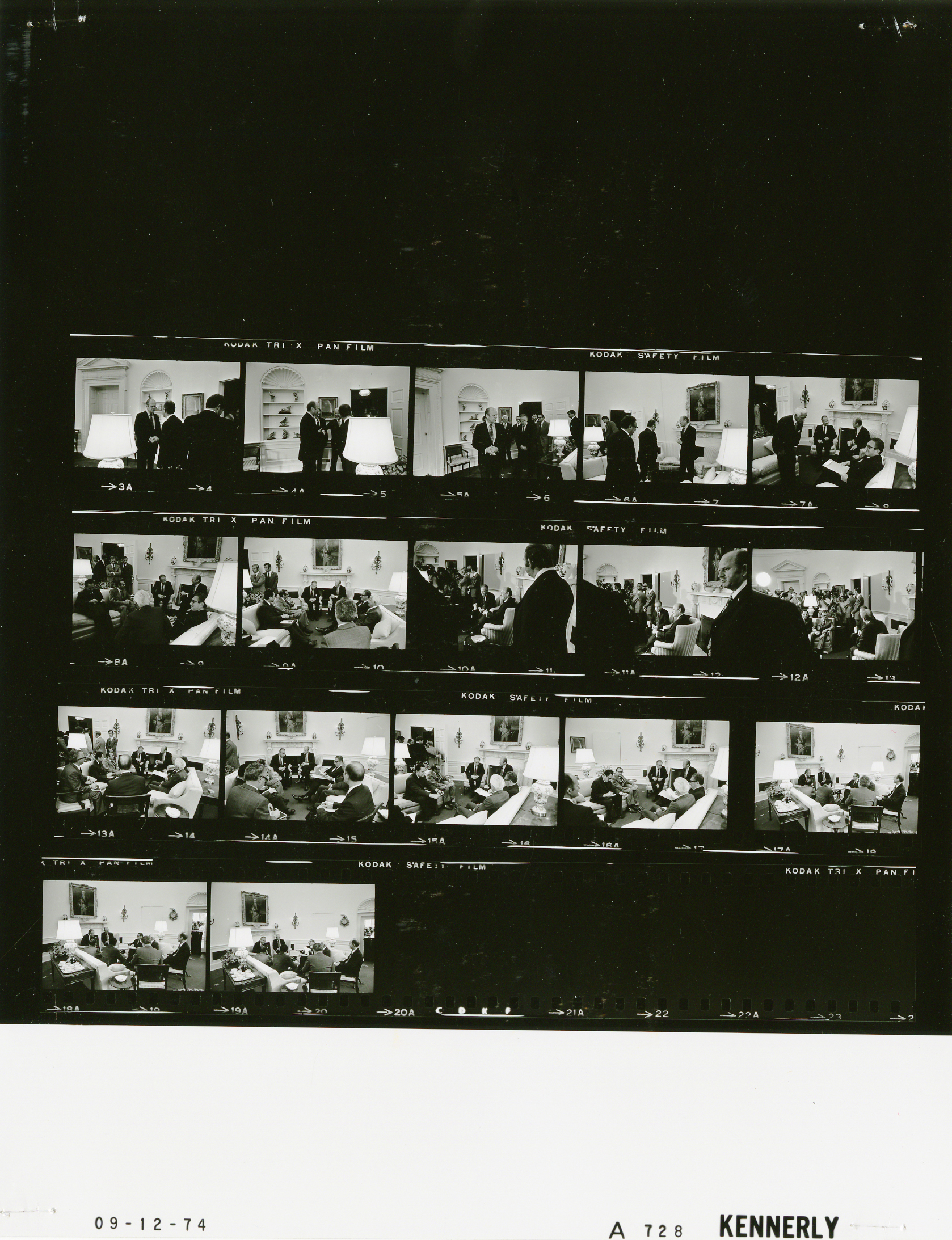 Open the full sheet
 A contact sheet from Yitzhak Rabin’s Washington visit. The official photograph log names Mordechai Gazit among the meeting’s participants for the frame ranges listed here.
Photograph: David Hume Kennerly
White House Photographic Office · Gerald R. Ford Presidential Library
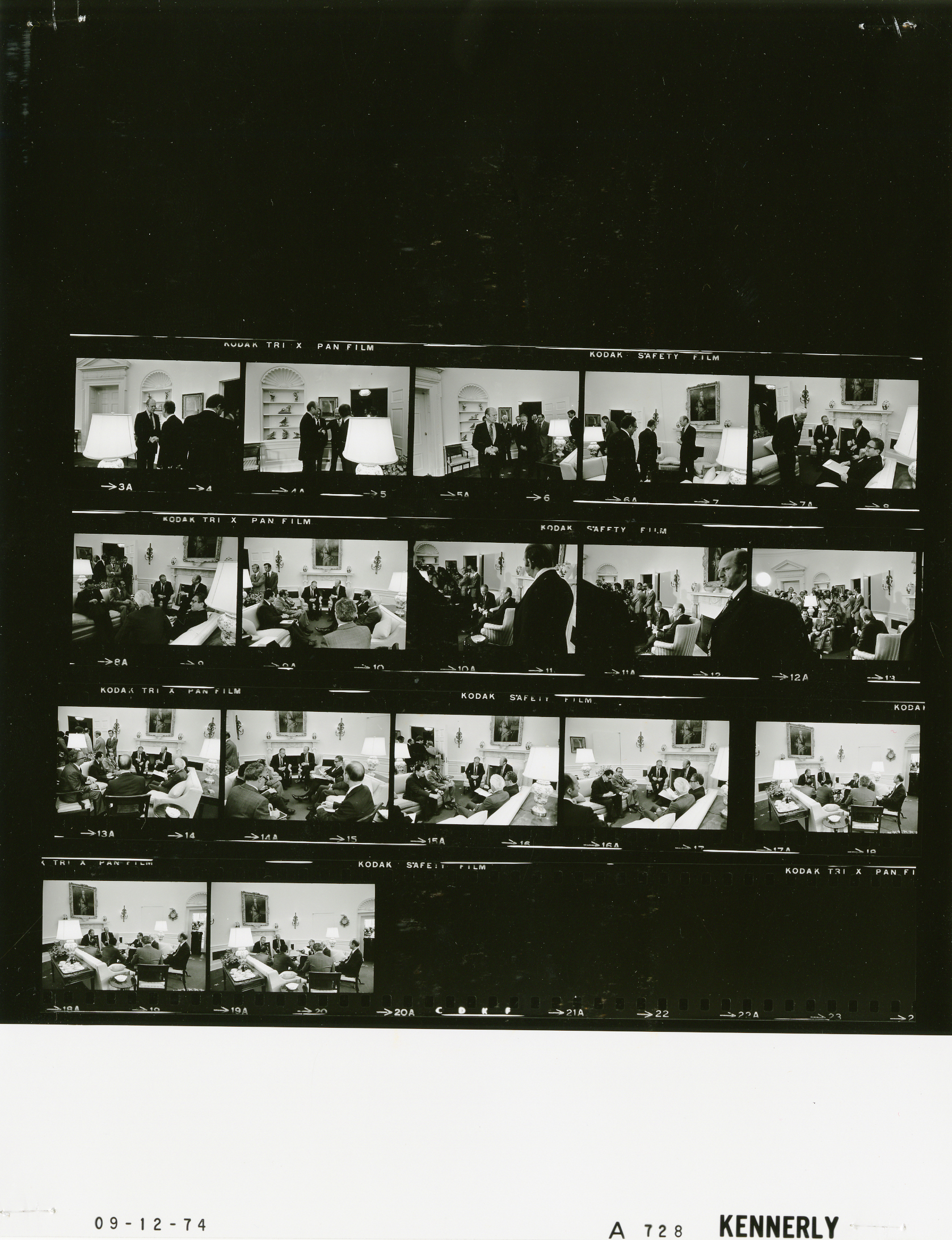
A conversation in the Cabinet Room
 Open the full sheet
 The Israeli delegation’s frame ranges record conversations in the Cabinet Room. The photograph log names Gazit among the participants. This sheet also contains photographs of other events.
Photograph: William Fitz-Patrick
White House Photographic Office · Gerald R. Ford Presidential Library

Reading the contact sheets
These are complete contact sheets, rather than individual portraits. The logs identify groups of frames and note that not every participant appears in every exposure; they do not provide a face-by-face identification. The dates above follow the event logs. The 12 June stamp on sheet A5018 is its processing date; the delegation’s photographs are recorded under 11 June 1975.
Public domain. Collection details and rights at the Ford Library
Following his thinking through his words
The path to dialogue
In a conversation with Sarah Rehavi and Yehudit Reifen-Ronen, Gazit returned to the Jarring mission, the Rogers initiative and the preparations for talks. He discussed the work of the teams and what turns diplomatic contact into substantive negotiations. This is his retrospective testimony and interpretation.
“How can Israel say no?”
Testimony before the Agranat Commission
Gazit described the limits of his advisory role and the influence of reassuring assessments. He presented diplomatic reports assembled after the war and favored a national estimate and reconsidering responsibilities. The commissioners questioned his recollections and distinguished receiving information from assessing it. This is testimony, not the commission’s findings.
Read by topic and page
- The advisory role — protocol 4–6, PDF 4 ↗
- Exhibit 58 — protocol 23, PDF 15 ↗
- A national estimate — protocol 46–50, PDF 34 ↗
PDF links; page navigation depends on your viewer.
A diplomat returns to scholarship
A profile of Gazit as a fellow at Harvard, by Daniel Benjamin. The article is freely available.
Read the articleThe conversation with Ken Stein
A catalogued interview with Gazit about his work alongside Golda Meir and diplomacy after the war. The introduction is publicly accessible; the complete transcript requires a subscription.
Read the introduction and interview detailsThe smile that remains
In his family tribute, Dan-Eyal identified his grandfather sitting beside Yitzhak Rabin at a meeting with Dutch Foreign Minister Max van der Stoel. The image was preserved from a low-quality film. The frame supplied by the family appears alongside a version enhanced using artificial intelligence.
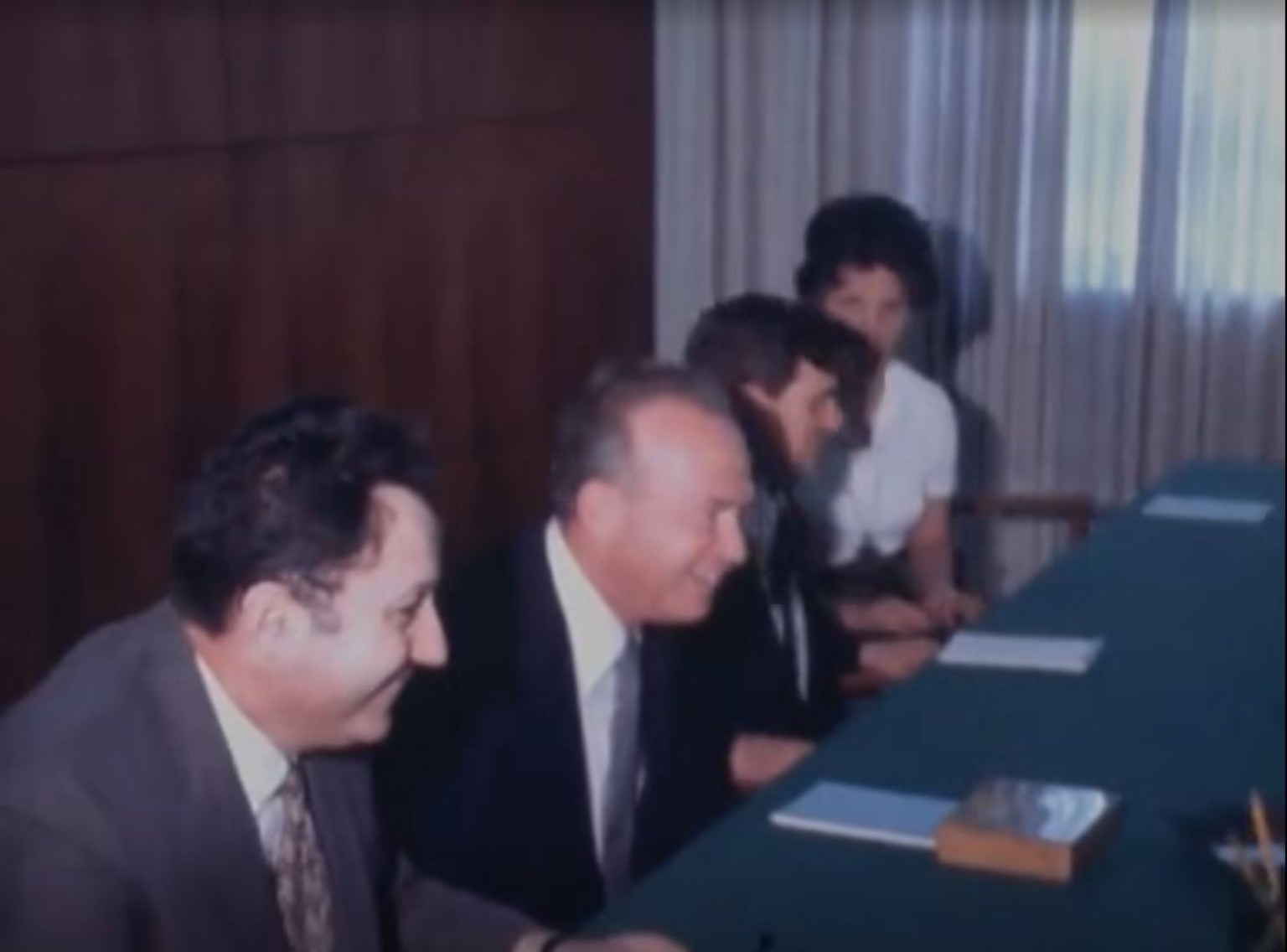
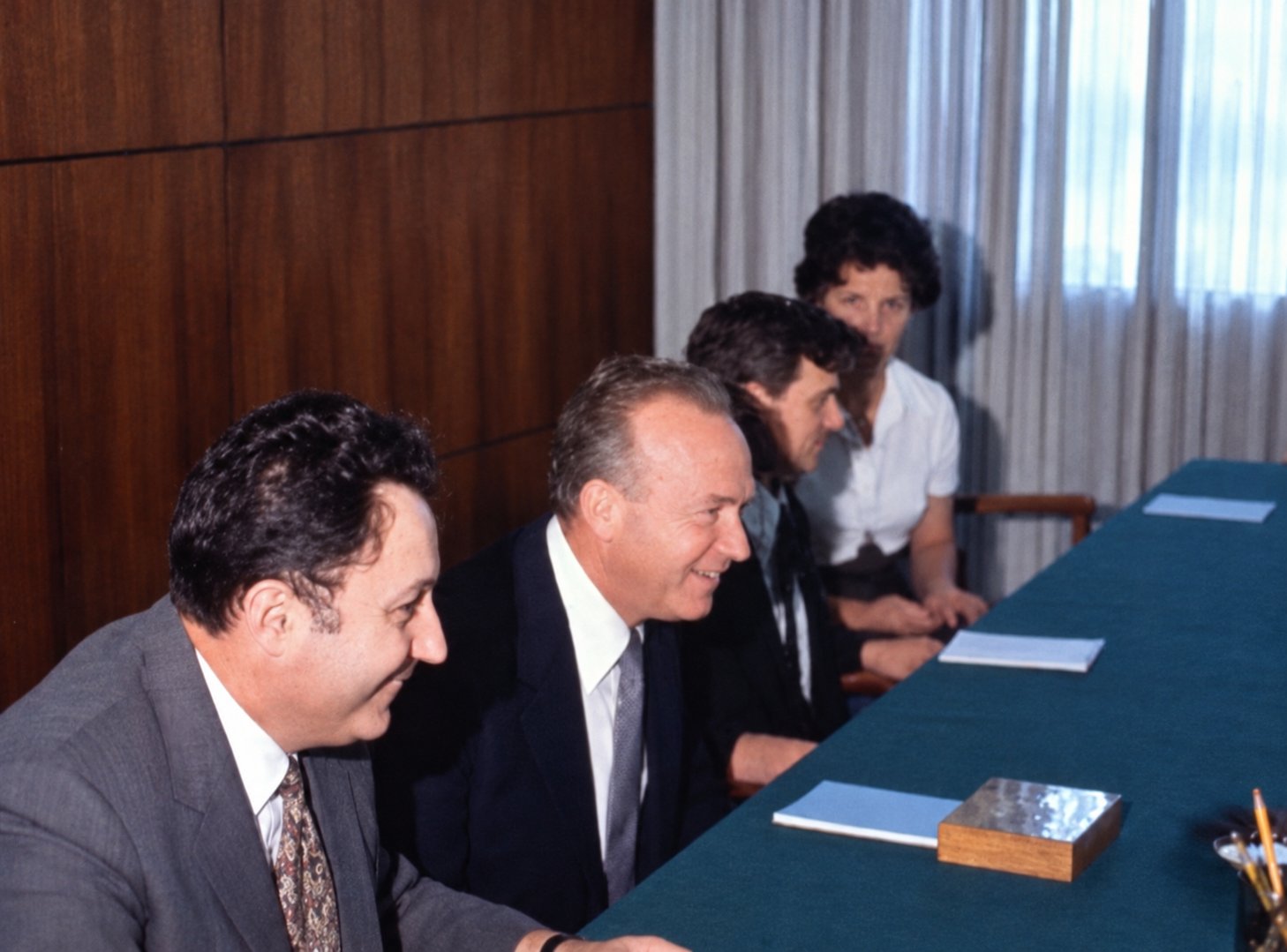
The processing may alter or add facial details, so it is not used as evidence for identification or historical details. The film source supplied by the family is British Pathé / Reuters.[R2]
To us, Grandpa Motke
Alongside the roles and dates are his grandson’s words about missing him, and about searching for a few more seconds in which he can be seen.
Read the family remembrance