
After the war Gazit went back to the cables and set down, summary by summary, what had passed between Israel and the United States in its three weeks: the arms requests and the airlift, the bargaining over a ceasefire, the timing of the talks with Kissinger, and the supplies to the encircled Third Army. The first is dated 11 November 1973, less than three weeks after the ceasefire, and is headed “provisional summary”. The latest is dated 7 May 1975. The State Archives published the summaries as an appendix of their own to the war collection, and describes such records as “a source of information of inestimable value for understanding the dynamics of the discussions” (site translation).
Four pages from the file
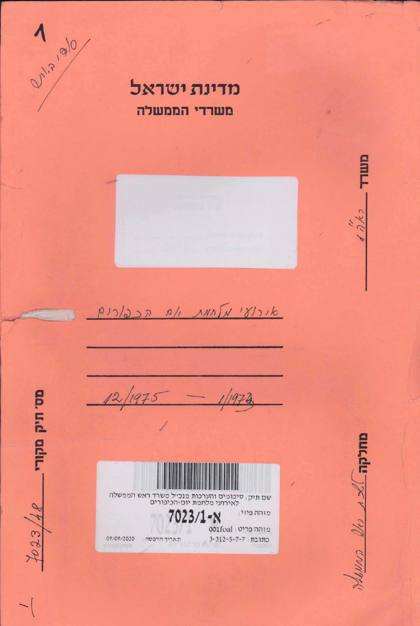
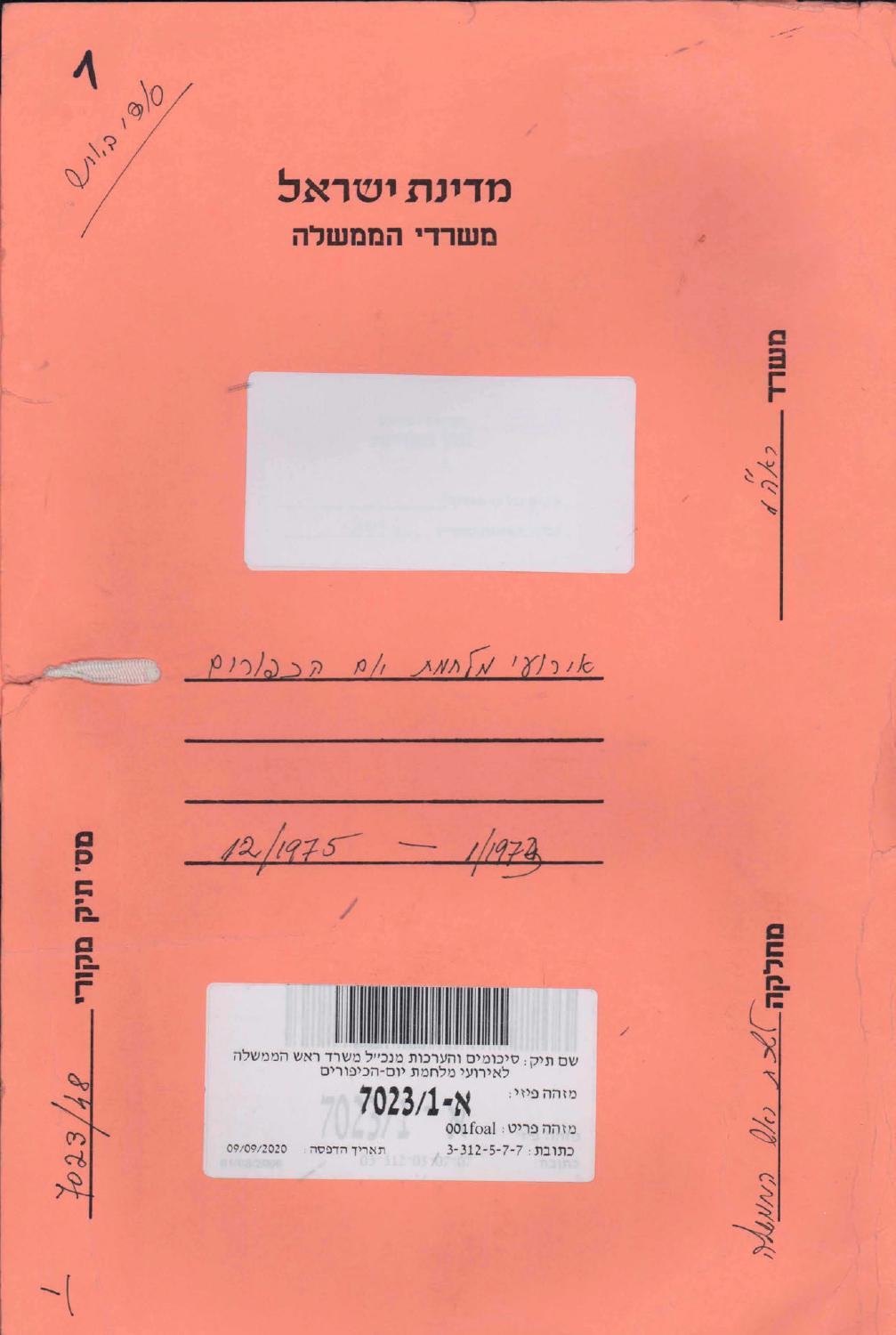
The file’s cover: “Events of the Yom Kippur War” 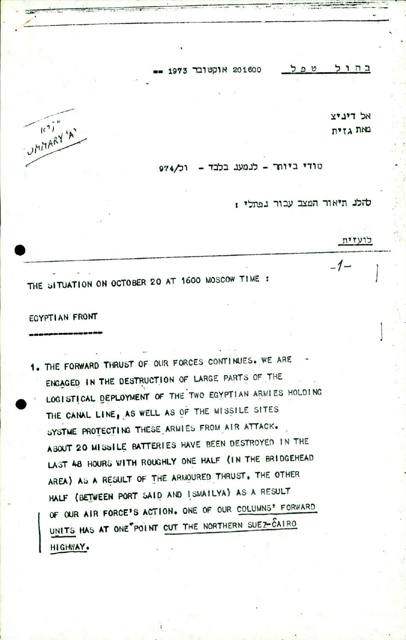
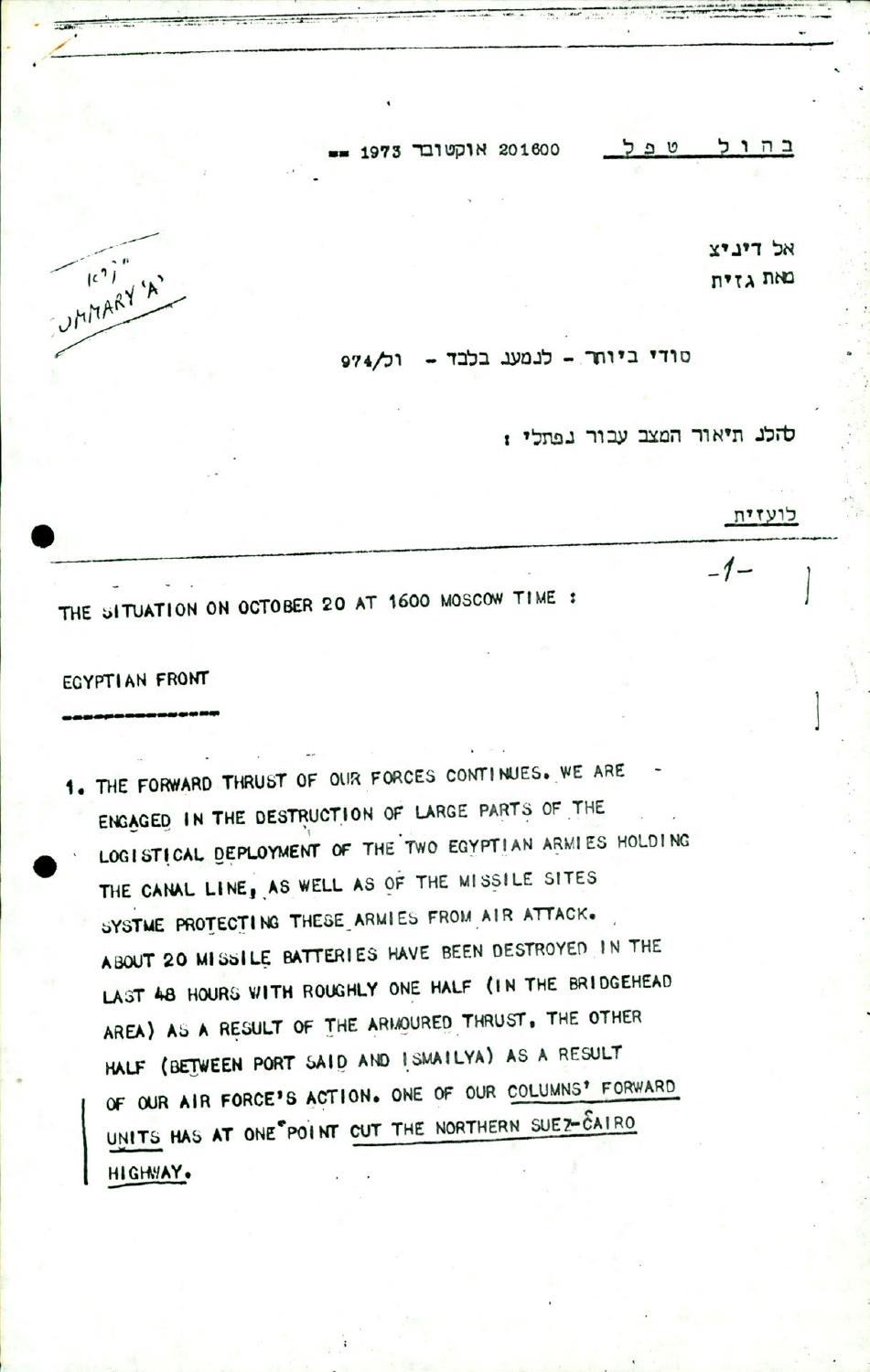
20 October 1973: the situation report “for Naftali” 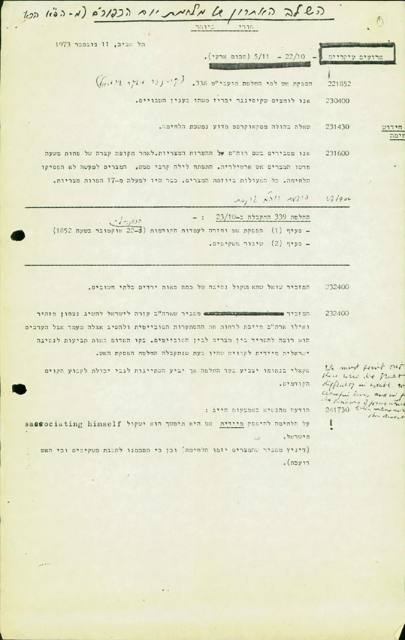
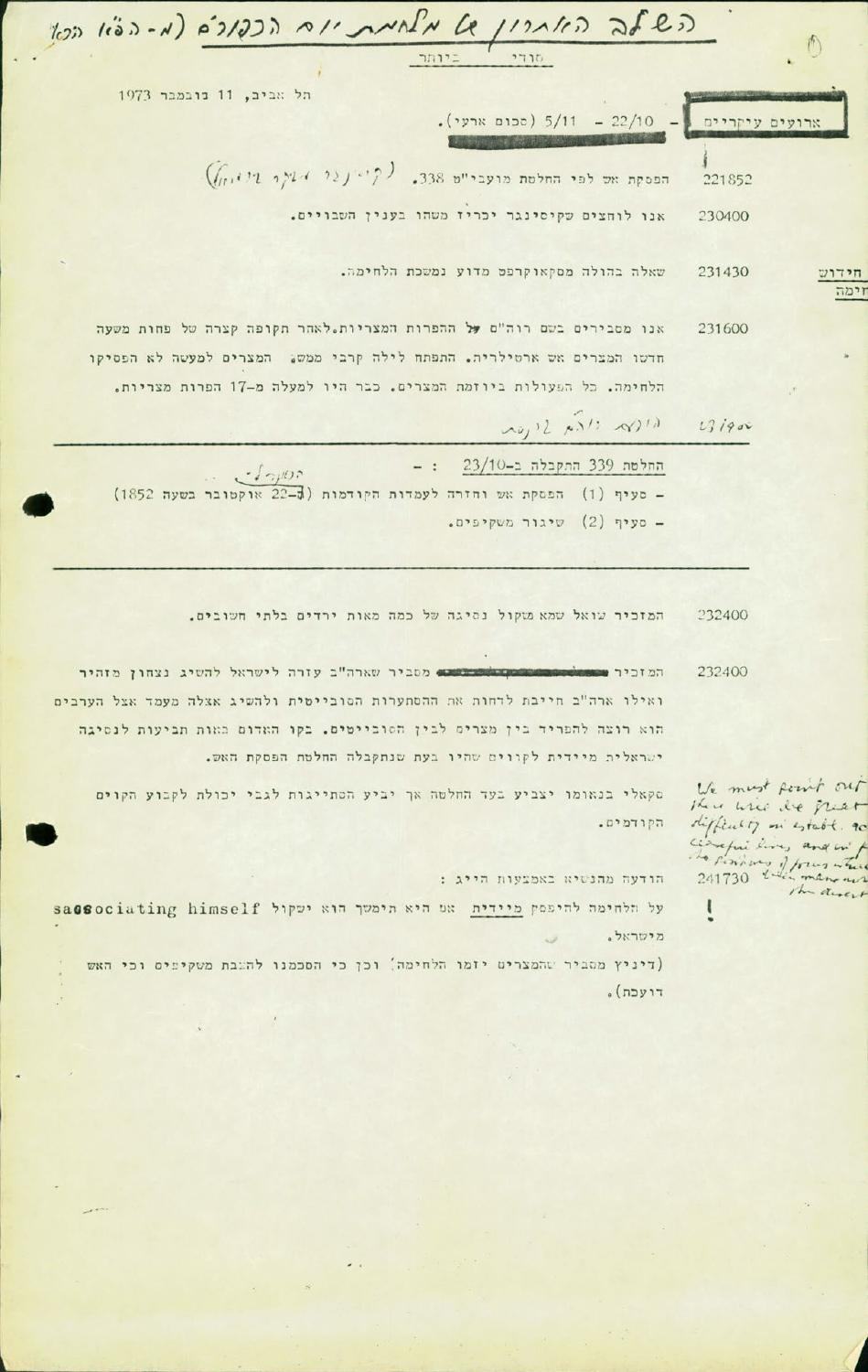
11 November 1973: the first summary, marked “provisional” 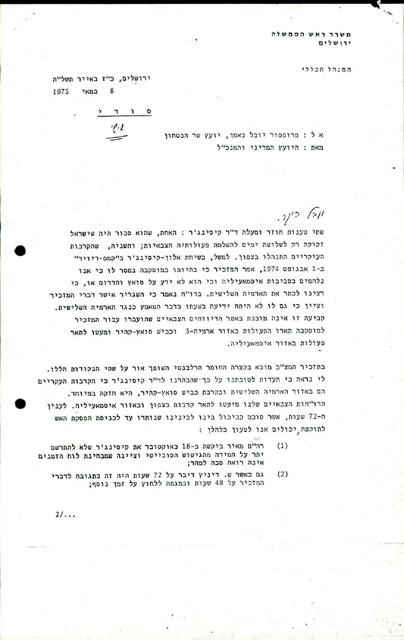
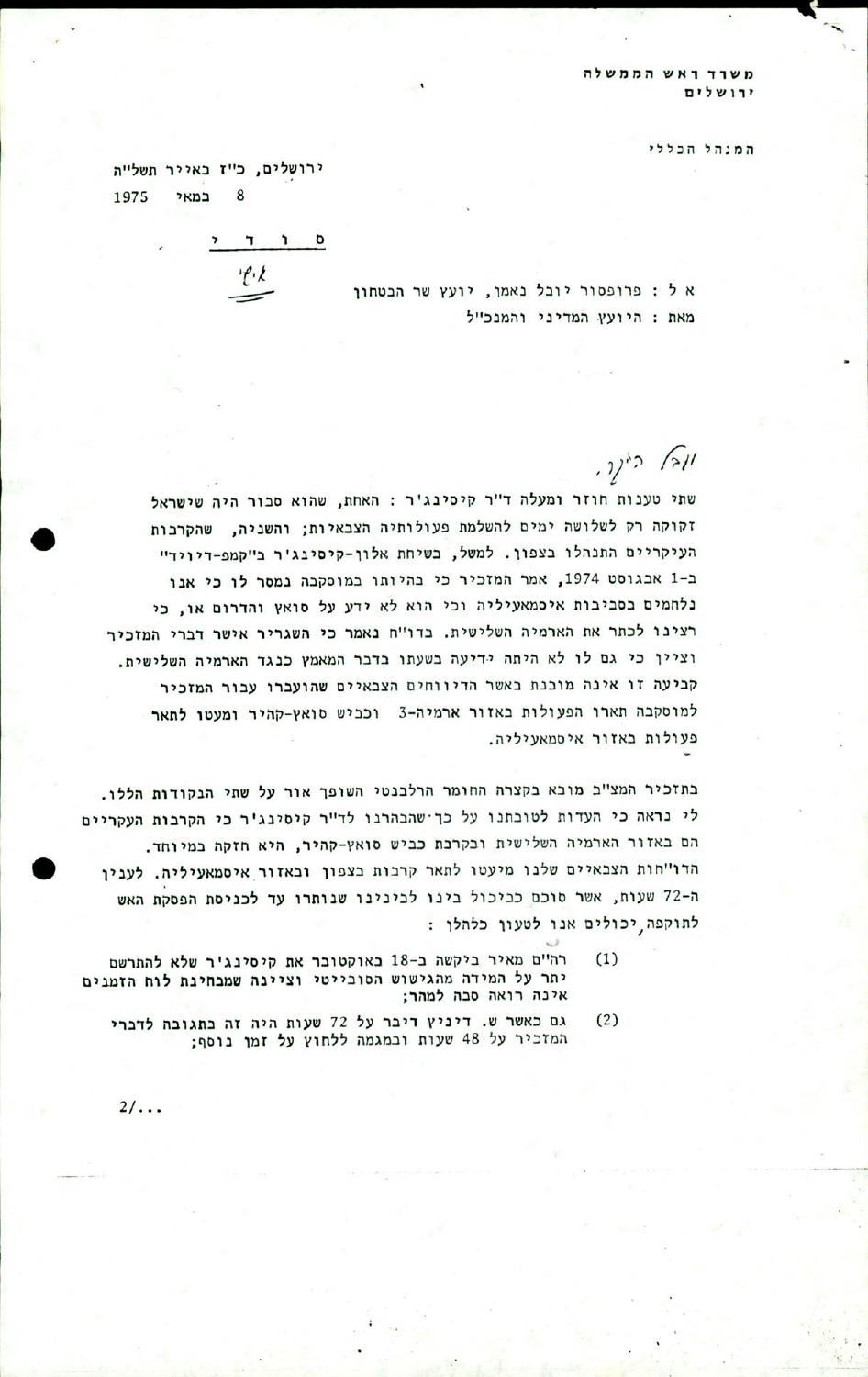
8 May 1975: his letter to Professor Yuval Ne’eman
Scans: Israel State Archives, file A-7023/1 ↗. Four pages of the file’s 196 are shown here; the file itself is kept at the Archives.
What the file shows, in the words on the page
6 October 1973
The call at 08:25
The summary of the day the war began records that at 09:00 Washington time Minister Mordechai ShalevMinister at the Israeli embassy in Washington.More on Mordechai Shalev in “People and events” → told Henry KissingerU.S. National Security Adviser and Secretary of State.What they wanted: To push the Soviet Union out of the Middle East and make the United States the only broker, through step-by-step agreements.More on Henry Kissinger in “People and events” → that the Egyptians and Syrians had opened hostilities. And in brackets: “This message was given on the basis of a telephone conversation with M. Gazit at 08.25” (site translation).
16–21 October 1973
The situation reports for Kissinger in Moscow
In six days about twenty situation cables from the fronts went out under his name, “To Simcha DinitzIsrael’s ambassador in Washington from 1973.What they wanted: American arms and support, during the war and after it.More on Simcha Dinitz in “People and events” →, from Gazit”. Four were written in English, “for Naftali”, and were meant for Henry KissingerU.S. National Security Adviser and Secretary of State.What they wanted: To push the Soviet Union out of the Middle East and make the United States the only broker, through step-by-step agreements.More on Henry Kissinger in “People and events” → during his talks in Moscow. According to a letter by Professor Yuval Ne’emanPhysicist; president of Tel Aviv University in the early 1970s, and a senior adviser at the Defence Ministry.More on Yuval Ne’eman in “People and events” → in the file, the two men worked on them together. The first says: “When the ceasefire comes into force it should find us holding a line that makes sense from a politico-military point of view.”
25 December 1974
A note beside the threat
In his summary on supplies to the Third Army he recorded Henry KissingerU.S. National Security Adviser and Secretary of State.What they wanted: To push the Soviet Union out of the Middle East and make the United States the only broker, through step-by-step agreements.More on Henry Kissinger in “People and events” →’s warning: if Israel did not allow supplies through, others would do it, the Americans among them, by an airlift the Pentagon was proposing. Gazit added a note of his own: the Secretary’s words may, “more than they reflect a real threat, be part of ‘the Americans’ wars’, Kissinger–Schlesinger” (site translation). James SchlesingerUS Secretary of Defense, 1973–1975.More on James Schlesinger in “People and events” → was the US Secretary of Defense.
May–June 1975
The argument with Kissinger
“Dr Henry KissingerU.S. National Security Adviser and Secretary of State.What they wanted: To push the Soviet Union out of the Middle East and make the United States the only broker, through step-by-step agreements.More on Henry Kissinger in “People and events” → keeps raising two claims”, he wrote to Ne’eman: that he had thought Israel needed only three days, and that the main battles were in the north. Gazit checked the cables and concluded: “From our reports it was clear to K. that the battle was in the south and not in the north.”
On the same page he also set down what the record does not prove: Simcha DinitzIsrael’s ambassador in Washington from 1973.What they wanted: American arms and support, during the war and after it.More on Simcha Dinitz in “People and events” → named 72 hours once, and “there is no way of discovering the source in Israel that authorised him to ask for that length of time”. In June he sent the material to Dinitz and wrote: “There is nothing new in Dr Kissinger’s claims” (site translations).
The twelve summaries
- The contacts with the Americans in the days before the war
- Our requests for arms as the war broke out: outgoing cables to Washington5–8 October 1973
- A digest of the cables from the Washington embassy to the Prime Minister’s Office5–7 October 1973
- The main cables between the Washington embassy and the Prime Minister’s Office, on arms and the airlift5–14 October 1973
- A summary of arms procurement between Israel and the United States up to the airlift, with marginal notes5–14 October 1973
- A summary of the negotiations between the powers on bringing a ceasefire resolution to the Security Council6–21 October 1973
- A summary of the positions of Israel, the powers and the Arab states in the ceasefire negotiations6–22 October 1973
- A summary of the positions of Israel, the powers and the Arab states: a second version6–22 October 1973
- The element of time in the talks with Kissinger, and an account of the fighting16–22 October 1973
- The United States and Israel: a summary of the contacts between the two countries17–22 October 1973
- The problem of supplies to the Third Army24–28 October 1973
- The last phase of the war, from Security Council Resolution 338: a summary of developments and diplomatic contacts22 October to 5 November 1973